
PRINCESS ANNE, MD — Before the highlight dunks, fast breaks, and bragging rights take center stage at Dre Day, a different kind of competition took place: the competition to become better young men, better students, and better leaders.
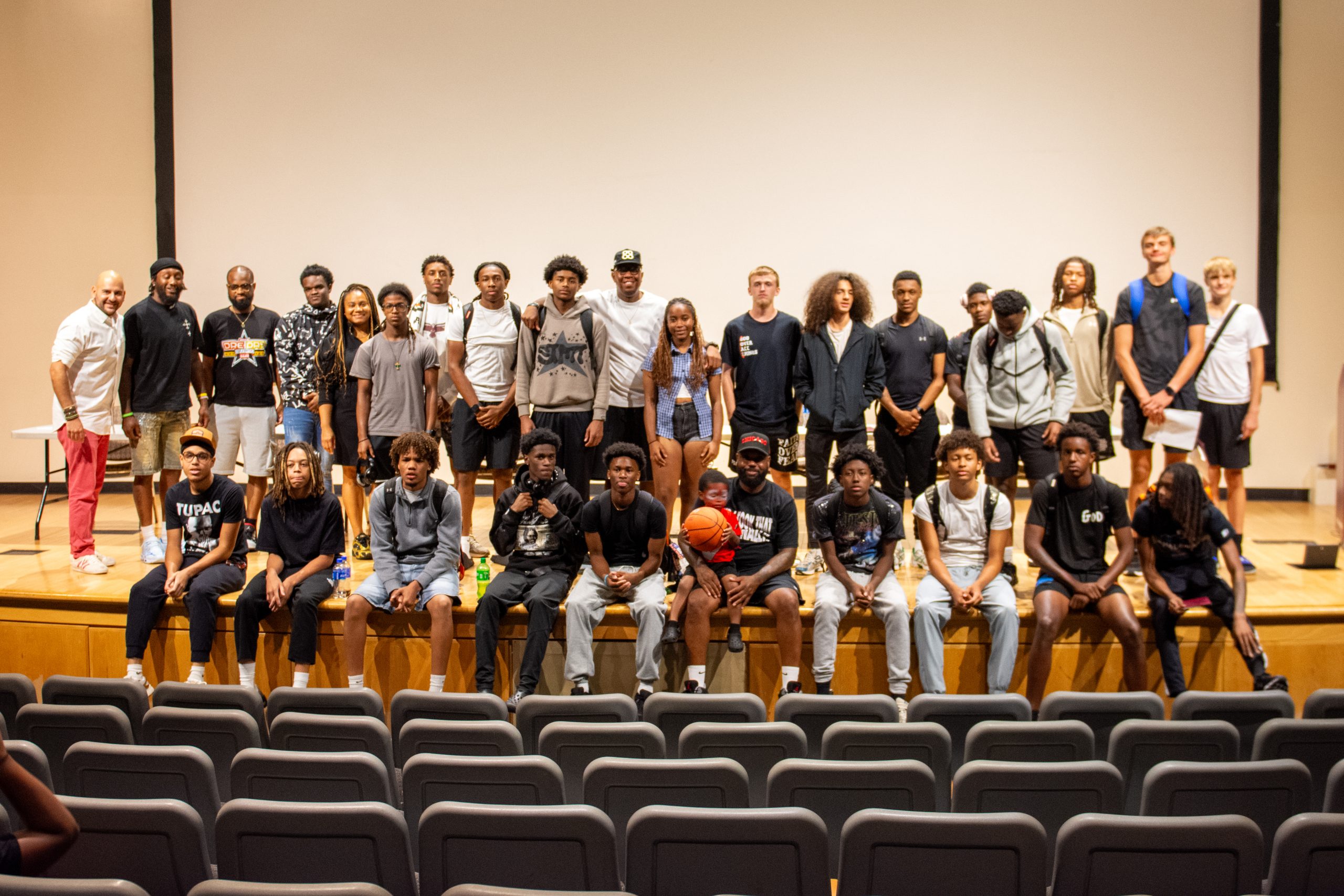
The Youth Sports Summit: Building Champions On and Off the Court, presented by former Maryland and Loyola basketball standout Andre Collins, brought together aspiring athletes from across the Eastern Shore for a powerful day of education, mentorship, and real-world life lessons. The summit served as the centerpiece of Dre Day before participants and spectators shifted their attention to the highly anticipated basketball showcase featuring some of the Shore’s top freshmen and sophomores facing off against the region’s standout juniors and seniors.
But before anyone stepped onto the hardwood, Collins made sure the young athletes understood that success starts long before game day.
Building Confidence From the Start
The day opened with an interactive session led by Quiana Tilghman, who challenged participants to introduce themselves, share what sport they play, and provide information about their personal aspirations.
The exercise may have seemed simple, but its purpose was significant.
By encouraging students to speak confidently in front of their peers, Tilghman helped them begin developing a skill that many athletes overlook: the ability to communicate, lead, and command a room. Those qualities, she emphasized, can be just as valuable in life as any athletic talent.
Andre Collins Shares His Journey Through Adversity
Collins followed by asking attendees a straightforward question:
“What is hard work?”
The responses came quickly.
Students spoke about early mornings, late nights, extra repetitions, discipline, and doing the work others are unwilling to do.
Collins agreed, but then challenged them to think even deeper.
“The road to success is often not a straight line,” he told the group.
Using his own life as an example, Collins shared the obstacles he faced on his journey to becoming a Division I athlete.
After struggling with standardized testing requirements, his path took a detour to Hargrave Military Academy, more than eight hours from home. When he eventually arrived at the University of Maryland, standing just 5-foot-9, playing time wasn’t automatically handed to him.
The challenges continued when he transferred to Loyola University. The transition cost him more than 70 college credits, forced him to sit out a season due to transfer regulations, and required him to attend school year-round to complete his degree and recover academically.
His message was clear: setbacks are not the end of the journey. Persistence, adaptability, and resilience often determine success more than talent alone.
Collins also encouraged attendees to stay engaged throughout the day’s workshops, stressing the importance of learning about issues that can impact young athletes both on and off the court, including substance abuse, peer pressure, and violence.
Honest Conversations About Drugs and Peer Pressure
During a breakout session led by Lauresa Wigfall, students engaged in candid discussions about the realities they see among their peers regarding drug and alcohol use.
Rather than speaking at the students, Wigfall encouraged open dialogue and active participation.
The session focused on how marijuana use, vaping, smoking, and alcohol consumption can negatively affect athletic performance, recovery, conditioning, and decision-making.
Students also discussed one of the toughest challenges many teenagers face: peer pressure.
Several participants acknowledged how difficult it can be to push back against harmful behaviors when social norms make those conversations uncomfortable. The discussion emphasized the importance of making independent decisions and surrounding themselves with people who support their goals.
Creating a Positive Digital Footprint
In another breakout session, Tilghman addressed a topic that has become increasingly important in recruiting and personal branding: social media.
Many students expressed a belief that athletes from the Eastern Shore often do not receive the same exposure as players from larger markets. Tilghman challenged them to think differently.
Rather than focusing on limitations, she encouraged the athletes to maximize the opportunities available through social media and digital platforms.
Her advice was direct:
- Avoid random and meaningless posts.
- Understand that everything online leaves a footprint.
- Don’t post blurry or low-quality photos.
- Avoid emotional or negative content.
- Be intentional about reposting content.
- Only share material that aligns with the person you aspire to become.
Collins added another important recruiting perspective.
He advised athletes to pay attention to the music they use in highlight videos and social media stories.
According to Collins, college coaches evaluating talent don’t want to hear lyrics glorifying violence, guns, or criminal activity while reviewing a player’s athletic accomplishments.
The message resonated throughout the room: recruiting begins long before a coach makes contact.
Learning From Those Who’ve Done It
Before the event’s final panel discussion, attendees heard from two college student-athletes who shared personal stories about taking ownership of their futures.
Both speakers detailed how self-promotion, consistency, and determination helped them earn opportunities to compete at the Division I level.
Their experiences reinforced one of the summit’s central themes: athletes cannot simply wait to be discovered. Success often requires initiative, networking, and a willingness to advocate for oneself.
Real Talk From the Experts
The summit concluded with a panel featuring Neema Connor, Ricky Goings, Nima Omnidvar, Kory Holden, and Shelton Hawkins, who provided invaluable insight into navigating the journey from high school athletics to the next level.
The discussion covered topics including NCAA Eligibility Center requirements, NIL, academic responsibilities, transfer rules, and the long-term impact those decisions can have on an athlete’s future.
Panelists shared personal experiences and practical advice, giving attendees a rare opportunity to learn from individuals who have successfully navigated the challenges they may soon face themselves.
The panel closed with a story about Collins’ own breakthrough moment during his high school years, bringing the event full circle and reminding participants that every successful athlete’s journey begins somewhere.
More Than Basketball
While the excitement of the Dre Day basketball showcase undoubtedly drew attention, the Youth Sports Summit proved to be the heart of the event.
The lessons shared throughout the day extended far beyond sports. From academics and personal branding to decision-making and resilience, participants were equipped with tools designed to help them succeed in every arena of life.
As some of the young athletes later took the court for the freshmen and sophomores versus juniors and seniors showcase, they carried more than basketball knowledge with them. They carried lessons from mentors, former athletes, and community leaders committed to helping them become champions both on and off the court.
And in the end, that may be the biggest victory of all.